Need a Reserve Fund Study in Alberta?
Brookstone Engineering is a reserve fund study provider with in-house APEGA-licensed Professional Engineers (P.Eng.) serving Edmonton Metro, Calgary Metro and Central Alberta. Request a Reserve Fund Study Quote (Alberta)
Mechanical lifecycle planning is the systematic process of forecasting, budgeting for, and scheduling the replacement of critical HVAC equipment such as boilers, make-up air units (MAUs), and rooftop units (RTUs) based on their expected service life and condition. For condominium corporations in Alberta, effective mechanical lifecycle planning ensures uninterrupted heating and ventilation while preventing the financial shock of emergency replacements that can cost hundreds of thousands of dollars.
Need a Reserve Fund Study in Edmonton?
Brookstone is an engineering firm and reserve fund study provider with in-house APEGA-licensed Professional Engineers (P.Eng.). Request a Reserve Fund Study Quote (Edmonton)
Understanding the lifecycle of your building's mechanical systems isn't just about avoiding breakdowns—it's about protecting your investment and maintaining comfortable living conditions for residents. Reserve Fund Study services in Alberta include detailed mechanical lifecycle assessments that help condo boards make informed decisions about when to repair, refurbish, or replace major equipment.
What Are the Critical Mechanical Systems in Alberta Condominiums?
Understanding the mechanical systems that require lifecycle planning is the first step toward effective reserve fund management. Alberta condominiums rely on several key mechanical systems to maintain comfort and safety throughout harsh winters and variable summers.
Boilers and Heating Systems
Boilers form the backbone of heating systems in most Alberta condominium buildings. These pressurized vessels heat water or generate steam that circulates through radiators, baseboard heaters, or in-floor heating systems. Modern high-efficiency condensing boilers have become the standard for replacement projects in Alberta, offering energy savings of 20-30% compared to older conventional models.
The lifecycle of boiler systems depends on several factors specific to Alberta's climate. Extended heating seasons—often running from September through May—mean boilers in Edmonton and Calgary operate under load for 7-8 months annually, significantly more than buildings in milder climates. Water quality also plays a crucial role; areas with hard water experience accelerated scale buildup that reduces efficiency and shortens equipment life.
A comprehensive boiler replacement planning approach considers not just the boiler itself but associated components including burners, controls, pumps, and heat exchangers. Strategic component replacement can extend overall system life while improving efficiency and reliability.
Make-Up Air Units (MAUs)
Make-up air units replace air exhausted from buildings through bathroom and kitchen fans, maintaining proper building pressurization and indoor air quality. In Alberta's climate, MAUs face unique challenges as they must condition extremely cold outdoor air—sometimes as low as -40°C—to comfortable indoor temperatures.
MAUs typically integrate heating coils, filters, fans, and dampers into a single packaged unit. The heating components work particularly hard during Alberta winters, cycling on and off frequently to maintain supply air temperatures. This thermal stress accelerates wear on heat exchangers and control components.
Modern MAU replacements often incorporate energy recovery systems that capture heat from exhaust air to pre-warm incoming fresh air, reducing operating costs by 25-35%. This technology has become increasingly popular in Reserve Fund Study in Edmonton projects where energy efficiency improvements can justify higher upfront capital costs.
Rooftop Units (RTUs)
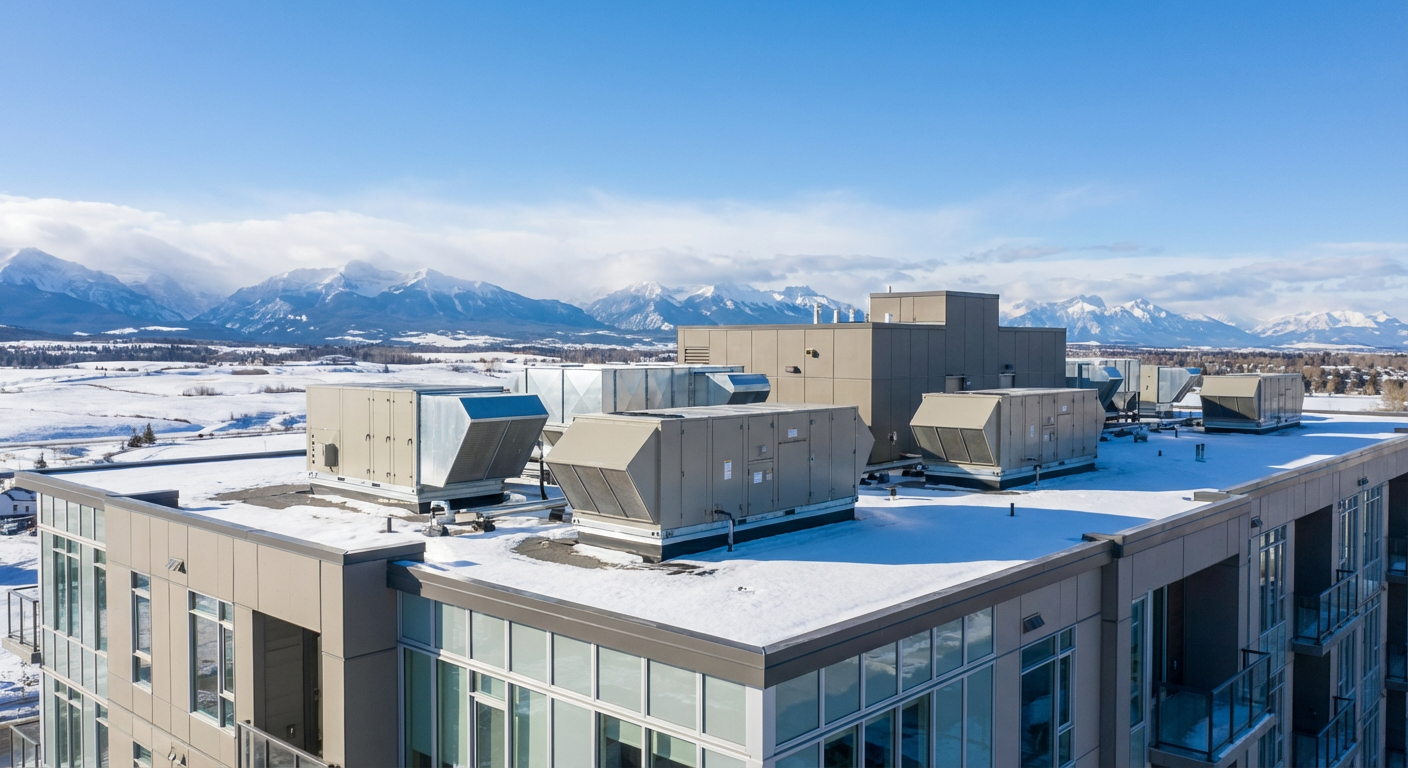
Rooftop units are self-contained HVAC systems that provide both heating and cooling for specific building zones. Common in low-rise and mid-rise condominiums across Alberta, RTUs package all components—compressors, heat exchangers, fans, and controls—in a weatherproof cabinet mounted on the roof.
Alberta's climate presents particular challenges for RTUs. Temperature extremes ranging from -40°C in winter to +35°C in summer force these units through extreme thermal cycling. Snow accumulation, ice formation, and harsh UV exposure from Alberta's high-altitude sun all contribute to accelerated deterioration of cabinet materials, gaskets, and control components.
RTU lifecycle planning must account for both the base unit and auxiliary components. Economizers, which bring in outside air for free cooling, require more frequent service in dusty Alberta conditions. Heating components work overtime during extended cold snaps, while cooling systems face challenges from sudden temperature swings common in chinook-affected regions like Calgary.
How Does Alberta's Climate Impact Mechanical Equipment Lifecycles?
Alberta's unique climate significantly affects mechanical equipment performance and longevity, requiring region-specific lifecycle planning approaches. Understanding these climate impacts helps condominium boards budget accurately and schedule replacements appropriately.
Extended Heating Seasons
Alberta's heating season typically spans 7-8 months, from September through May, with some northern regions requiring heating into June. This extended operational period means mechanical systems in Alberta accumulate operating hours 30-40% faster than equipment in temperate climates.
Boilers in Edmonton condominiums may operate 5,000-6,000 hours annually compared to 3,000-4,000 hours in milder regions. This increased runtime accelerates wear on pumps, valves, heat exchangers, and control systems. Professional Reserve Fund Study in Calgary assessments account for this accelerated wear when projecting replacement timelines.
The constant heating demand also means Alberta mechanical systems rarely enjoy extended rest periods that allow components to fully cool and equilibrate. This continuous thermal stress contributes to material fatigue and accelerated aging of seals, gaskets, and expansion joints.
Extreme Temperature Cycling
Alberta experiences some of North America's most dramatic temperature swings. Chinook winds can raise temperatures by 20-30°C within hours, while Arctic air masses can plunge temperatures below -40°C. This thermal cycling creates expansion and contraction stress on all mechanical components.
Metal fatigue from repeated thermal expansion and contraction commonly affects heat exchangers, piping connections, and cabinet structures. Gaskets and seals become brittle faster in extreme cold, leading to air leakage and reduced efficiency. Control systems and sensors experience calibration drift from constant temperature variation.
RTUs face particular challenges from ice formation during freeze-thaw cycles. Condensate drainage systems must be carefully designed and maintained to prevent ice dams that can damage cabinets and compromise weatherproofing.
Water Quality Considerations
Water chemistry varies significantly across Alberta and directly impacts boiler and hydronic system lifecycles. Areas with hard water—common in southern Alberta—experience rapid scale accumulation on heat transfer surfaces. This scale acts as an insulator, reducing efficiency and forcing equipment to work harder to meet heating demands.
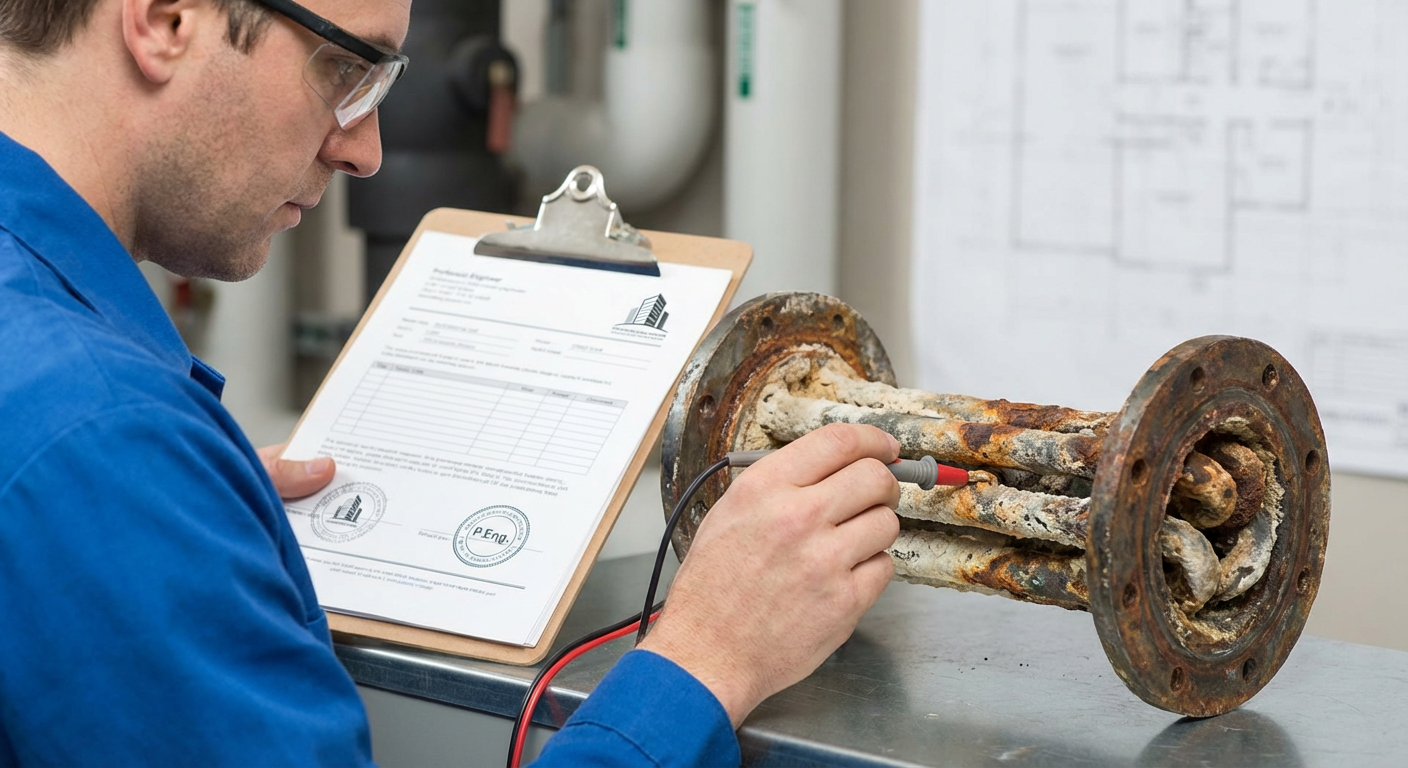
Corrosion rates also vary based on local water chemistry and treatment practices. Buildings without proper water treatment programs may experience premature heat exchanger failure, requiring replacement 5-10 years earlier than well-maintained systems.
Regular water testing and treatment should be integrated into mechanical lifecycle planning. Professional engineers conducting reserve fund studies evaluate water treatment programs and recommend improvements that can significantly extend equipment life.
What Are the Warning Signs That Mechanical Systems Need Replacement?
Recognizing early warning signs of mechanical system deterioration allows condominium boards to plan replacements proactively rather than reacting to emergencies. Professional condition assessments identify these indicators during comprehensive reserve fund studies.
Performance Degradation Indicators
Declining performance often signals approaching end-of-life for mechanical equipment. Boilers that struggle to maintain temperature setpoints during cold weather, especially when outdoor temperatures aren't exceptionally low, indicate reduced capacity from scale buildup, combustion issues, or heat exchanger deterioration.
Increasing temperature complaints from residents provide valuable feedback about system performance. Hot and cold spots, inconsistent heating between floors, or units that take longer to warm up all suggest declining system capacity or distribution problems.
Energy consumption trends reveal efficiency losses. Utility bills that increase disproportionately to heating degree days indicate equipment working harder to deliver the same output—a classic sign of declining efficiency that precedes failure.
Physical Condition Indicators
Visual inspection during routine maintenance reveals critical condition indicators. Rust, corrosion, and water staining around boilers, MAUs, or RTUs suggest seal failures, condensation issues, or water leaks that will worsen over time.
Cracked or damaged insulation on boilers and piping allows heat loss that wastes energy and may indicate underlying structural issues. In Alberta's climate, damaged insulation can also lead to condensation and corrosion during shoulder seasons when mechanical rooms experience temperature and humidity fluctuations.
Cabinet deterioration on rooftop equipment—including rust-through, damaged access panels, and compromised weatherproofing—accelerates internal component degradation by allowing moisture infiltration and exposure to the elements.
Operational Reliability Issues
Increasing service call frequency indicates declining reliability. Equipment requiring multiple repairs within a heating season, especially for different components or systems, suggests overall deterioration rather than isolated failures.
Control system problems become more common as equipment ages. Inconsistent operation, failure to respond to thermostats, or erratic cycling often result from failing sensors, corroded control boards, or worn actuators in aging equipment.
Emergency shutdowns or safety lockouts—particularly those requiring manual resets or service calls to restore operation—present serious concerns. These events indicate safety systems responding to dangerous conditions that will worsen without equipment replacement.
How Should Condominium Boards Plan for Mechanical System Replacements?
Effective mechanical lifecycle planning requires a systematic approach that balances technical requirements, financial constraints, and operational needs. Professional engineering assessments provide the foundation for sound decision-making.
Conducting Professional Condition Assessments
Professional engineers specializing in mechanical systems conduct detailed condition assessments as part of comprehensive reserve fund studies. These assessments evaluate equipment age, maintenance history, operating conditions, and physical condition to project remaining service life accurately.
A thorough mechanical assessment includes visual inspection, operational testing, efficiency measurements, and destructive testing when warranted. For boilers, combustion analysis and pressure testing reveal internal condition that isn't visible externally. Infrared thermography identifies hot spots, air leakage, and insulation deficiencies in RTUs and MAUs.
Engineers licensed in Alberta (P.Eng.) understand regional climate impacts and local installation practices that affect equipment lifecycles. Their assessments account for Alberta-specific factors including extended heating seasons, temperature extremes, and local water chemistry when projecting replacement timelines.
Developing Replacement Strategies
Mechanical lifecycle planning extends beyond simply scheduling replacements at expected end-of-life dates. Sophisticated strategies consider opportunities to improve efficiency, modernize controls, and phase multi-unit replacements to spread costs.
Strategic component replacement can extend overall system life cost-effectively. Replacing worn burners, updating controls, or rebuilding pumps for 10-15% of full replacement cost may extend service life by 3-5 years while improving efficiency and reliability.
Phased replacement approaches work well for buildings with multiple boilers or RTUs. Rather than replacing all units simultaneously, boards can spread costs over 2-3 budget cycles while maintaining redundancy. This strategy requires careful planning to ensure remaining equipment can handle full building loads during interim periods.
Technology upgrades often justify early replacement even before equipment reaches end-of-life. High-efficiency condensing boilers, variable-speed drives, and advanced controls can generate energy savings that offset replacement costs within 7-10 years, making early replacement financially advantageous.
Budget Planning and Reserve Fund Adequacy
Mechanical system replacements represent significant expenditures—often $200,000-$500,000 for boiler plants in mid-sized buildings, $15,000-$25,000 per RTU, and $50,000-$100,000 for MAU systems. Adequate reserve fund contributions ensure funds are available when replacements become necessary.
Reserve Fund Study services in Alberta include detailed cost projections for mechanical replacements based on current market conditions and projected inflation. These projections account for Alberta-specific factors including labor rates, equipment availability, and installation complexity in existing mechanical rooms.Boards should review mechanical replacement projections annually and adjust reserve contributions as needed. Market conditions, technology changes, and unexpected condition deterioration may require updating original projections to maintain adequate funding.
Emergency replacement scenarios cost 30-40% more than planned projects due to premium pricing for expedited delivery, overtime labor, and limited equipment selection. Adequate reserve funding prevents these emergency situations and allows boards to secure competitive pricing through proper procurement processes.
What Are the Latest Technologies in HVAC Replacement for Condominiums?
Technology advances in HVAC equipment offer Alberta condominium corporations opportunities to improve efficiency, enhance comfort, and reduce operating costs when planning mechanical replacements. Understanding available options helps boards make informed decisions during replacement projects.
High-Efficiency Condensing Boilers
Modern condensing boilers achieve efficiency ratings of 95-98% compared to 80-85% for conventional boilers being replaced in Alberta condominiums. These units extract additional heat from exhaust gases by condensing water vapor, recovering energy that conventional boilers discharge through the flue.
Condensing technology works particularly well in Alberta hydronic heating systems that use lower water temperatures for in-floor heating or modern baseboard systems. The greater the temperature difference between supply and return water, the more energy condensing boilers recover.
Modulating burners—now standard on quality condensing boilers—adjust firing rates to match heating demand precisely rather than cycling on and off. This capability improves comfort, reduces wear from thermal cycling, and maintains peak efficiency across varying load conditions common in Alberta's variable climate.
Multiple small boilers with sophisticated controls often outperform single large units in modern installations. This approach provides redundancy, allows individual units to operate at higher efficiency by matching capacity to load, and stages operation to maximize condensing time.
Variable-Speed Drive Technology
Variable-speed drives (VSDs) on fans and pumps represent one of the most cost-effective mechanical upgrades available. Traditional mechanical systems operate at constant speed regardless of actual demand, wasting significant energy during partial-load conditions—which occur 80-90% of operating hours in Alberta buildings.
VSDs adjust motor speed to deliver precisely the airflow or water flow needed at any moment. Energy consumption decreases with the cube of speed reduction, meaning a 50% speed reduction saves nearly 87% of energy consumption. For buildings undergoing Reserve Fund Study in Edmonton and Calgary, VSD retrofits often pay for themselves within 3-5 years through energy savings.
Modern RTUs and MAUs increasingly incorporate factory-installed VSDs as standard equipment. When replacing older constant-speed units, the efficiency improvement from VSD technology alone justifies premium pricing for advanced equipment.
Advanced Controls and Building Automation
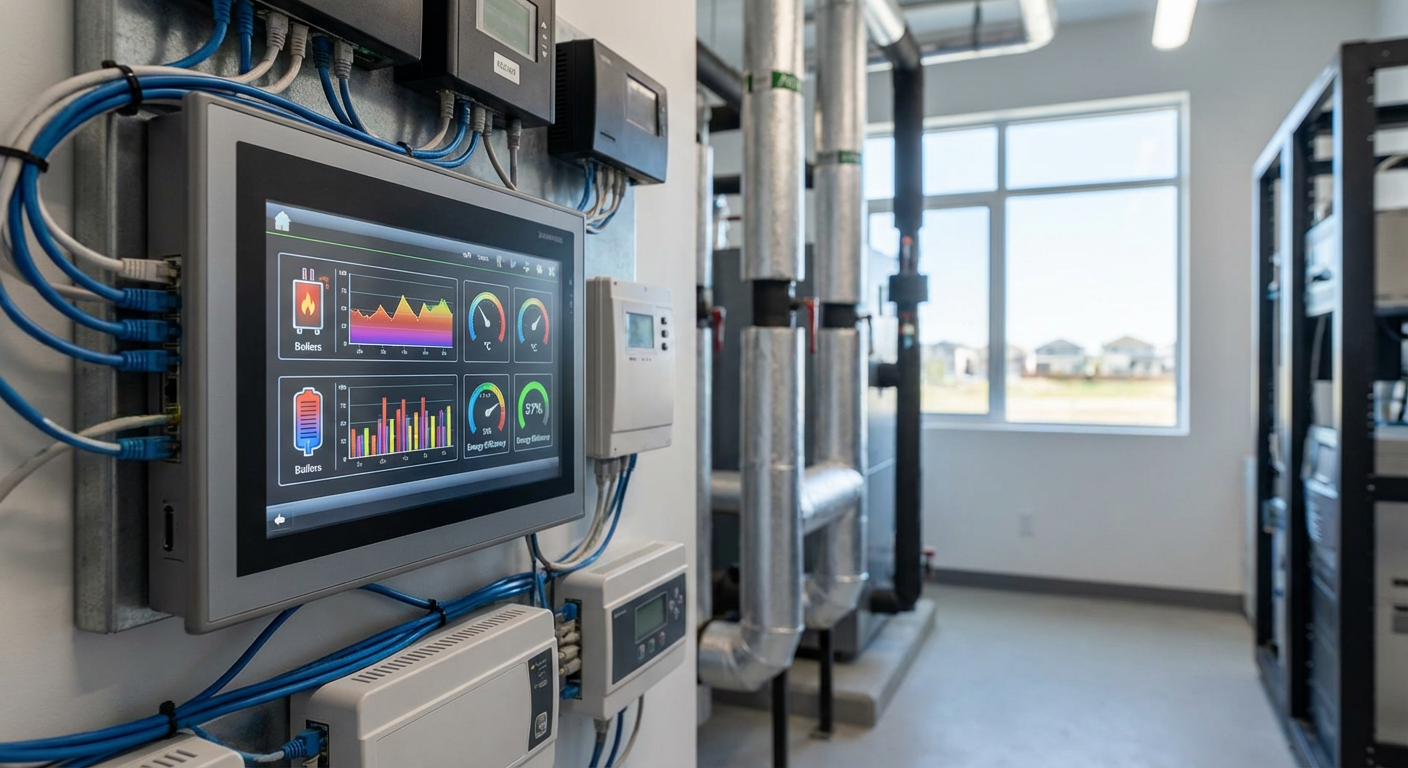
Modern control systems optimize mechanical system operation far beyond traditional thermostats and time clocks. Building automation systems (BAS) integrate boilers, RTUs, MAUs, and other equipment into coordinated control strategies that minimize energy use while maintaining comfort.
Outdoor reset controls—which adjust supply water temperature based on outdoor temperature—allow boilers to operate in condensing mode more often, maximizing efficiency. This simple control strategy can reduce heating costs by 10-15% while extending equipment life by reducing operating temperatures.
Remote monitoring and diagnostics allow property managers to identify developing problems before they cause failures. Trending capabilities track efficiency degradation over time, supporting condition-based maintenance and accurate lifecycle projections. For multi-building condominium complexes, centralized monitoring from a single location reduces service costs while improving response times.
Demand-controlled ventilation adjusts fresh air intake based on occupancy rather than running continuously. This strategy significantly reduces the energy required to condition outside air—Alberta's largest ventilation cost—while maintaining indoor air quality.
How Can Preventive Maintenance Extend Mechanical Equipment Life?
Comprehensive maintenance programs significantly impact mechanical equipment lifecycles, potentially extending service life by 20-30% while reducing repair costs and improving efficiency. Effective programs address Alberta-specific challenges that accelerate equipment deterioration.
Boiler Maintenance Programs
Annual boiler maintenance should include combustion testing and tuning to maintain peak efficiency. Properly adjusted combustion minimizes soot accumulation on heat transfer surfaces, maintains efficiency, and prevents dangerous carbon monoxide production.
Water-side maintenance proves equally critical in Alberta's hard-water regions. Annual inspection and cleaning of heat exchangers removes scale deposits that insulate heat transfer surfaces. Buildings without water treatment programs should implement chemical treatment to control scale formation, corrosion, and biological growth.
Pressure testing before each heating season verifies vessel integrity and identifies developing leaks before they cause failures. This testing represents a minor investment that prevents emergency shutdowns during peak heating demand.
Control calibration and safety system testing ensure proper operation and prevent nuisance shutdowns. Temperature sensors drift over time, causing inefficient operation or comfort complaints. Regular calibration maintains accuracy and optimal performance.
RTU and MAU Service Requirements
Quarterly filter changes represent the single most important maintenance task for rooftop equipment. Dirty filters increase energy consumption, reduce capacity, and accelerate wear on fans and motors. Alberta's dusty conditions—particularly in spring and fall—may require more frequent filter changes than manufacturer recommendations.
Annual coil cleaning removes accumulated dirt, pollen, and biological growth from heat exchangers. Dirty coils reduce efficiency by 20-30% and increase compressor workload, accelerating wear. In Calgary's chinook-affected climate, where outdoor units experience frequent freeze-thaw cycles, coil inspection should identify ice damage and ensure proper drainage.
Belt-driven components require regular inspection and tension adjustment. Loose belts slip, reducing efficiency and capacity. Over-tightened belts accelerate bearing wear. Proper tension and alignment extend both belt and motor bearing life.
Economizer systems—which provide free cooling using outside air—require regular service to maintain proper operation. Damper linkages seize from corrosion, sensors drift out of calibration, and actuators fail from dust contamination. Buildings that neglect economizer maintenance forfeit significant energy savings.
Documentation and Trending
Maintaining detailed maintenance records supports accurate lifecycle planning and helps identify developing problems early. Documenting service dates, tasks performed, parts replaced, and operating parameters creates a history that engineers use during condition assessments.
Trending key performance indicators reveals gradual degradation that might otherwise go unnoticed. Tracking monthly energy consumption, comparing performance to heating degree days, and monitoring repair frequency all provide early warning of developing problems.
Photographic documentation during major service events creates visual records that help engineers assess condition during reserve fund studies. Photos of heat exchangers, internal components, and control panels provide valuable condition information without requiring equipment disassembly during assessments.
Reserve Fund Studies Across Alberta
We provide reserve fund studies that meet Alberta condominium reserve fund study requirements. Service areas include Reserve Fund Study Edmonton, Reserve Fund Study Calgary, and Reserve Fund Study Red Deer.
Ready to get started? Get a Quote →