Need a Reserve Fund Study in Edmonton?
Brookstone is an engineering firm and reserve fund study provider with in-house APEGA-licensed Professional Engineers (P.Eng.). Request a Reserve Fund Study Quote (Edmonton)
Understanding reserve fund study costs is a crucial first step for any Edmonton condominium corporation planning for long-term financial stability. A reserve fund study cost in Edmonton typically ranges from $2,500 to $15,000 or more, depending on factors such as property size, complexity, age, and the level of detail required by your condominium corporation.
As a board member or property manager in Alberta, you're responsible for ensuring your condominium corporation maintains adequate reserves for future repairs and replacements. While the cost of a reserve fund study represents an investment, understanding what drives these costs helps you budget appropriately and select the right Reserve Fund Study services in Alberta for your property's specific needs.
What Factors Influence Reserve Fund Study Pricing in Alberta?
The cost of a reserve fund study in Edmonton isn't arbitrary—it reflects the time, expertise, and resources required to conduct a thorough assessment of your condominium property. Understanding these cost drivers helps you evaluate quotes and appreciate the value you're receiving.
Property Size and Number of Units
The most significant factor affecting reserve fund study cost is your property's physical size and unit count. A small 20-unit townhouse complex requires far less inspection time and analysis than a 200-unit high-rise tower.
- Small properties (under 50 units): Typically range from $2,500 to $5,000
- Medium properties (50-150 units): Generally cost between $5,000 and $10,000
- Large properties (150+ units): Often exceed $10,000, with some complex properties reaching $15,000 or more
The relationship between size and cost isn't always linear. A 100-unit property doesn't necessarily cost twice as much as a 50-unit property, as some baseline costs remain constant regardless of size.
Building Age and Condition
Older Edmonton properties typically require more detailed inspections and analysis, which increases study costs. A building constructed in the 1970s will have more components nearing the end of their useful life compared to a property built in 2015.
Engineers and reserve fund analysts spend additional time on older properties to:
- Assess the remaining useful life of aging building envelope components
- Evaluate outdated mechanical and electrical systems
- Identify deferred maintenance issues that may require immediate attention
- Review historical repair records and maintenance patterns
- Determine if original construction methods or materials present future challenges
Property Complexity and Amenities
The architectural complexity and amenity level of your condominium directly impacts reserve fund study costs. Properties with extensive amenities require more time to inspect and analyze each component's condition and replacement timeline.
Common features that increase study complexity include:
- Multiple building types: Mixed-use developments combining residential towers, townhouses, and commercial spaces
- Recreational facilities: Swimming pools, fitness centers, tennis courts, or social rooms
- Parking structures: Underground parkades, heated surface lots, or automated parking systems
- Specialized systems: Geothermal heating, solar panels, or advanced building automation systems
- Unique architectural features: Extensive glass curtain walls, decorative facades, or heritage elements requiring specialized assessment

How Do Different Study Levels Affect Reserve Fund Study Costs?
Alberta regulations recognize three levels of reserve fund studies, each with different scope requirements and corresponding costs. Understanding these distinctions helps you budget appropriately and know when each level is required.
Level 1: Comprehensive Reserve Fund Study
A Level 1 study represents the most thorough and expensive option. This comprehensive analysis includes:
- Complete on-site inspection of all common property components
- Detailed condition assessment by qualified professionals (typically a P.Eng.)
- Individual cost estimates for each component replacement
- Cash flow projections for 30+ years
- Funding recommendations and alternative scenarios
- Photographic documentation of key components
- Typical Cost Range: $4,000 to $15,000+ depending on property characteristics
Alberta condominium corporations must obtain a Level 1 study when:
- Creating the initial reserve fund study for a new development
- Ten or more years have passed since the last Level 1 study
- Significant changes to the property have occurred
- Previous studies were inadequate or incomplete
Level 2: Update with Site Inspection
A Level 2 study updates an existing reserve fund study while maintaining reasonable accuracy through a limited site inspection. This option costs less than a comprehensive Level 1 study but provides updated projections based on:
- Targeted site inspection focusing on changed or aging components
- Updated replacement cost estimates reflecting current market conditions
- Revised cash flow projections
- Adjustments based on completed repairs or unexpected deterioration
- Typical Cost Range: $2,500 to $7,000 depending on property size and changes since the previous study
Level 3: Update Without Site Inspection
A Level 3 study represents the most economical option, updating financial projections without a new site inspection. This approach relies on:
- The previous study's component inventory and condition assessments
- Updated replacement cost estimates
- Adjusted timelines based on aging since the previous study
- Modified cash flow projections
- Typical Cost Range: $1,500 to $4,000
While Level 3 studies cost less, they may miss important changes in component condition or unexpected deterioration. Most Alberta condominium corporations find Level 2 updates offer the best balance of cost and accuracy between comprehensive Level 1 studies.
What Geographic and Market Factors Impact Edmonton Reserve Fund Study Costs?
Location-specific factors significantly influence Reserve Fund Study cost in Alberta, particularly in Edmonton's unique market conditions.
Edmonton vs. Other Alberta Markets
Reserve fund study pricing varies somewhat across Alberta's major markets, though differences are generally modest:
- Edmonton Market Characteristics: - Competitive market with numerous qualified providers
- Lower base costs compared to Calgary due to market dynamics
- Abundant P.Eng. professionals specializing in building assessment
- Well-established industry standards and competitive pricing
- Calgary Comparison: Reserve Fund Study pricing in Calgary tends to run 10-15% higher than Edmonton due to higher general business costs and professional fees in Alberta's largest city. However, property complexity matters more than location in determining final costs.
Seasonal Considerations
Edmonton's climate affects when reserve fund studies can be conducted and may influence costs:
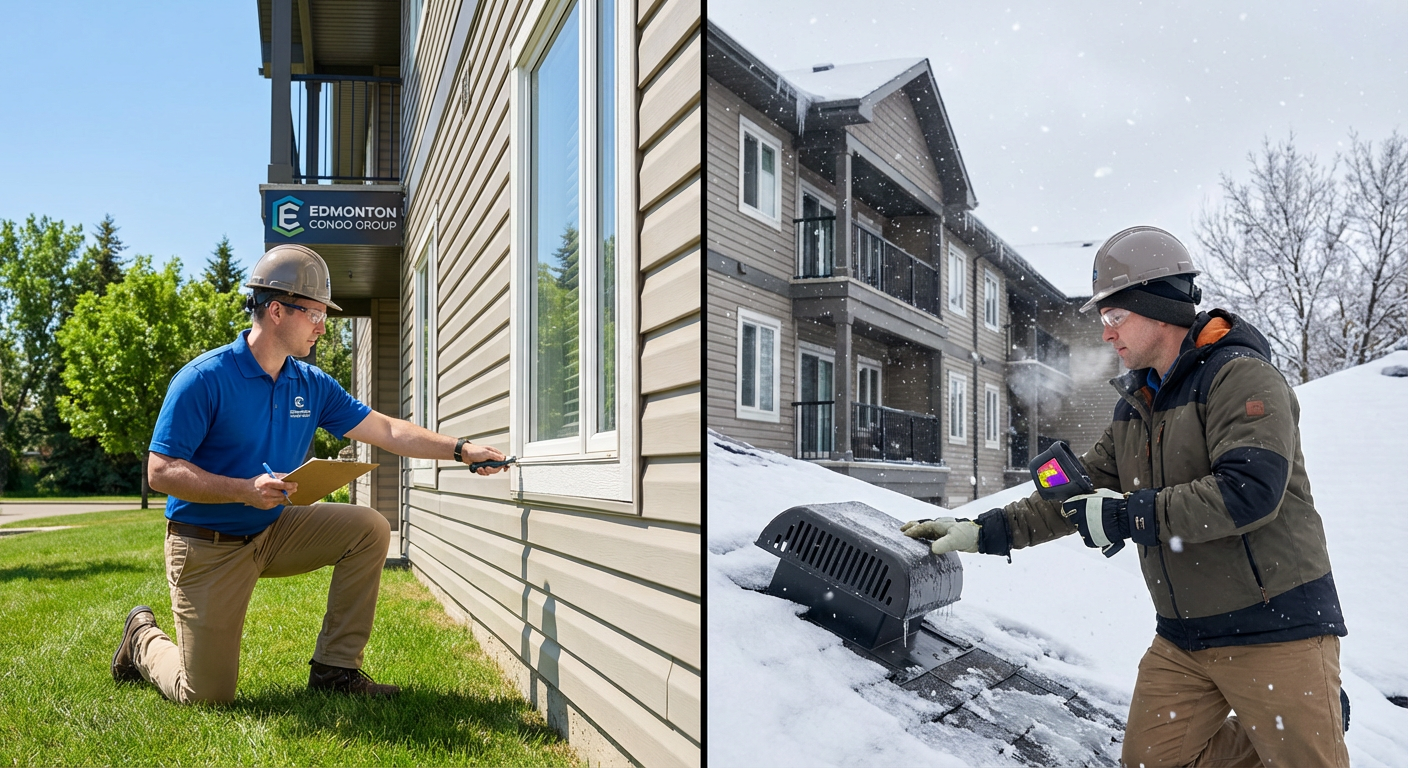
- Winter challenges: Cold weather can limit access to roofs, exterior components, and mechanical systems, potentially requiring follow-up visits in better weather
- Summer premium: Peak demand during optimal inspection months (May-September) may result in scheduling delays or minor price increases
- Year-round availability: Most qualified providers offer reserve fund studies throughout the year, adjusting inspection protocols for weather conditions
Travel and Accessibility
For Edmonton properties, travel costs are typically minimal since most qualified reserve fund study providers operate locally. However, properties in outlying areas or with difficult access may incur additional charges:
- Properties in rural areas near Edmonton may include modest travel fees
- Multi-building complexes spread across large sites require more inspection time
- Properties with restricted access times may need multiple site visits
Why Does Professional Qualification Matter for Reserve Fund Study Costs?
The qualifications and experience of the professional conducting your reserve fund study significantly impact both cost and value. Alberta's regulatory framework emphasizes qualified professionals for reserve fund studies, which influences pricing structures.
Professional Engineer (P.Eng.) Credentials
Many comprehensive reserve fund studies in Alberta are conducted by or under the supervision of Professional Engineers registered with the Association of Professional Engineers and Geoscientists of Alberta (APEGA). This credential ensures:
- Technical expertise: Deep understanding of building systems, materials, and deterioration patterns
- Professional liability: Appropriate insurance coverage and professional accountability
- Regulatory compliance: Familiarity with Alberta building codes and condominium regulations
- Quality standards: Adherence to engineering best practices and industry standards
Studies conducted by P.Eng. professionals typically cost more than those by less-qualified providers, but this premium reflects genuine value through:
- More accurate condition assessments
- Better remaining useful life estimates
- Improved cost projections
- Reduced liability risk for your condominium corporation
Industry Certifications and Experience
Beyond P.Eng. credentials, other qualifications influence reserve fund study quality and cost:
- Reserve Fund Analyst (RFA) designation: Specialized training in reserve fund analysis and financial planning
- Condominium Management Licenses: Alberta-specific knowledge of condominium governance
- Building Science expertise: Understanding of building envelope performance and moisture management
- Years of experience: Track record with similar properties and complexity levels
When evaluating Reserve Fund Study quotes, consider that the lowest price may not represent the best value if it compromises study quality or accuracy.
What's Included in a Standard Reserve Fund Study Fee?
Understanding what you're paying for helps you evaluate whether a quote represents fair value. A comprehensive reserve fund study fee should include these core elements:
Component Inventory and Assessment
- Complete listing of all common property components requiring future repair or replacement
- Physical inspection of accessible building elements
- Condition assessment using standardized rating systems
- Photographic documentation of key components
- Identification of immediate safety concerns or deficiencies
Financial Analysis and Projections
- Individual cost estimates for each component replacement
- Remaining useful life calculations
- 30-year (or longer) cash flow projections
- Multiple funding scenarios and recommendations
- Analysis of current reserve fund adequacy
- Contribution rate recommendations
Reporting and Deliverables
- Written report meeting Alberta regulatory requirements
- Executive summary suitable for owner communication
- Detailed component-by-component tables
- Cash flow spreadsheets and graphs
- Digital delivery in searchable PDF format
- Presentation to the board (often included, sometimes additional)
Additional Services That May Cost Extra
Some services fall outside standard reserve fund study fees and may incur additional charges:
- Board presentations or owner meetings: In-person attendance beyond initial report delivery
- Specialized testing: Infrared thermography, moisture testing, or concrete sampling
- Engineering assessments: Detailed structural evaluations or mechanical system analysis
- Rush service: Expedited timeline for urgent situations
- Extra copies or formats: Printed reports or customized data formats
- Consulting beyond the initial study: Follow-up questions, scenario modeling, or implementation guidance
When requesting a Reserve Fund Study quote, clarify exactly what's included in the base fee versus optional add-ons.

How Can Edmonton Condominium Corporations Get the Best Value?
Smart shopping and proper preparation help ensure you receive maximum value from your reserve fund study investment while controlling costs.
Obtaining Multiple Quotes
Alberta's competitive market for reserve fund studies means obtaining multiple quotes is both practical and advisable. Follow these best practices:
- Request quotes from 3-5 qualified providers: This range provides good comparison data without overwhelming your decision process
- Provide identical information to each provider: Share the same property details, unit count, age, and amenities to ensure comparable quotes
- Ask for detailed scope descriptions: Understand exactly what each provider includes in their fee
- Check qualifications and references: Verify P.Eng. status, industry certifications, and experience with similar properties
- Review sample reports: Ask to see anonymized examples of their work product
Timing Your Study Strategically
When you commission your reserve fund study can impact both cost and convenience:
- Plan ahead for regulatory deadlines: Alberta requires reserve fund studies on specific schedules, but waiting until the last minute may limit your options or result in rush fees
- Consider off-peak periods: Late fall and early winter sometimes offer better availability and potentially modest cost savings
- Coordinate with planned maintenance: Schedule the study when contractors are already on-site for major projects to maximize efficiency
- Budget in advance: Include reserve fund study costs in your annual budget rather than treating them as unexpected expenses
Preparing Your Property Documentation
Well-organized property information helps providers deliver more accurate quotes and reduces the time (and cost) required to complete the study:
- Gather building plans and specifications: Original construction documents help engineers understand your building systems
- Compile maintenance records: History of repairs and replacements improves accuracy of remaining useful life estimates
- Organize previous reserve fund studies: Prior studies provide valuable baseline information
- Prepare amenity lists: Detailed inventory of all common property components and equipment
- Document recent major projects: Information about completed work updates the component inventory
What Are Common Misconceptions About Reserve Fund Study Costs?
Several misunderstandings about reserve fund study pricing can lead to poor decisions or unrealistic expectations.
"The Cheapest Quote is the Best Deal"
Price shopping makes sense for many purchases, but reserve fund studies require balancing cost with quality and expertise. An inadequate study can result in:
- Underestimated future costs leading to insufficient reserve contributions
- Missed deficiencies requiring expensive emergency repairs
- Special assessments that could have been avoided with better planning
- Liability exposure if the study fails to meet Alberta regulatory standards
A moderately higher fee from a highly qualified provider often represents superior value over the long term.
"We Can Skip the Site Inspection to Save Money"
While Level 3 studies (updates without site inspections) cost less, they're only appropriate in specific circumstances. Skipping site inspections when they're needed can result in:
- Missed deterioration or unexpected component failures
- Inaccurate remaining useful life estimates
- Funding recommendations based on outdated conditions
- Non-compliance with Alberta requirements for comprehensive studies
Most condominium corporations find that Level 2 updates with limited site inspections offer the best balance between cost savings and study accuracy.
"Reserve Fund Studies Are One-Size-Fits-All"
Every Edmonton property has unique characteristics that affect both what's needed and what it costs. Two buildings with identical unit counts may have very different study requirements based on:
- Construction quality and materials
- Maintenance history and current condition
- Architectural complexity
- Amenity levels
- Previous study quality and currency
Generic pricing without property-specific evaluation rarely reflects the actual scope required for a quality study.
How Do Reserve Fund Study Costs Compare to Their Value?
While reserve fund study costs represent a significant expense, they're modest compared to the financial protection and planning benefits they provide.
Avoiding Emergency Special Assessments
A comprehensive reserve fund study helps prevent the scenario every condo owner dreads: large, unexpected special assessments for emergency repairs. Consider this example:
- Scenario: A 100-unit Edmonton condominium with inadequate reserves discovers critical parkade concrete deterioration requiring $500,000 in immediate repairs.
- Without adequate reserves: $5,000 special assessment per unit, often with limited notice
- Cost of proper planning: $7,000 reserve fund study plus $50/month additional contributions per unit
- Savings through planning: Owners avoid financial shock and benefit from gradual, predictable contributions
The reserve fund study cost represents less than 2% of the emergency repair cost but could have prevented the crisis entirely through proper planning.
Optimizing Reserve Contributions
Reserve fund studies help condominium corporations avoid both over-funding (unnecessarily high fees) and under-funding (insufficient reserves). The financial optimization alone often justifies the study cost:
- Identifying over-contributions: Some properties discover they're collecting more than necessary, allowing fee reductions
- Right-sizing contributions: Accurate projections ensure contributions match actual future needs
- Alternative funding scenarios: Studies model different contribution strategies to find optimal approaches
- Investment planning: Better cash flow projections enable improved investment strategies for reserve funds
Supporting Property Values
Well-managed reserve funds positively impact unit resale values. Prospective buyers and their lenders view adequate reserves as evidence of:
- Professional, responsible property management
- Reduced risk of future special assessments
- Well-maintained building systems and components
- Financial stability and predictability
The cost of a reserve fund study is insignificant compared to the collective property value it helps protect across all units.
What Questions Should You Ask When Comparing Reserve Fund Study Providers?
Making an informed decision about your reserve fund study provider requires asking the right questions during the quote process.
About Qualifications and Experience
- Are you or your supervising professional a P.Eng. registered with APEGA?
- How many reserve fund studies have you completed in Alberta?
- How many studies have you done for properties similar to ours in size and type?
- Can you provide references from recent clients, particularly Edmonton condominium corporations?
- What professional liability insurance coverage do you carry?
About Scope and Methodology
- Will you conduct a complete on-site inspection of all accessible components?
- How much time do you estimate for the site inspection?
- What happens if weather or access issues prevent inspecting certain components?
- How do you estimate replacement costs—regional contractors, cost databases, or other sources?
- What time horizon do your cash flow projections cover?
- Will you provide multiple funding scenarios and recommendations?
About Deliverables and Timeline
- What format will the final report take, and what will it include?
- Will you present the study findings to our board in person?
- What's your typical timeline from engagement to final report delivery?
- Do you offer follow-up support for questions after report delivery?
- How do you handle updates or revisions if we identify missing information?
About Pricing and Terms
- What exactly is included in your quoted fee?
- Are there any potential additional charges we should anticipate?
- What are your payment terms and schedule?
- Is there a discount for bundling a future update study?
- What's your cancellation or rescheduling policy?
Reserve Fund Studies Across Alberta
We provide reserve fund studies that meet Alberta condominium reserve fund study requirements. Service areas include Reserve Fund Study Edmonton, Reserve Fund Study Calgary, and Reserve Fund Study Red Deer.
Ready to get started? Get a Quote →