Need an Alberta Reserve Fund Study?
Brookstone Engineering is a reserve fund study provider with in-house APEGA-licensed Professional Engineers (P.Eng.) serving Edmonton Metro, Calgary Metro and Central Alberta. Request a Reserve Fund Study Quote (Alberta)
Alberta's Condominium Property Regulation sets a hard limit on how old your reserve fund plan can get. Under section 30, a condominium corporation must carry out a new reserve fund study, receive a new reserve fund report, approve a new reserve fund plan and give owners a copy on or before 5 years from the day the most recent reserve fund plan was approved. The new study must follow the same rules as the original one under section 23.
This guide is written for condo boards and property managers who want to plan that update properly. It covers when the 5-year clock actually starts, what has to be finished before the deadline, how to work backwards from it, and why boards that start late usually pay for it. If you are a buyer looking at a building with an old study, see our separate article on what buyers should do when a reserve fund study is overdue. If your concern is a board that is not funding to its current study, see condo board not following the reserve fund study.
What Does Alberta's 5-Year Rule Actually Require?
The rule is in section 30 of the Condominium Property Regulation (AR 168/2000). By the deadline, the corporation must have completed four things, not one:
- Carried out a reserve fund study through a reserve fund study provider.
- Received a written reserve fund report from that provider.
- Approved a reserve fund plan at the board level, based on the report.
- Provided copies of the approved plan to owners before collecting funds under it.
The section 23 requirements also apply to the update. The study must include:
- an inventory of the depreciating property that may need repair or replacement within the next 30 years or longer
- its present condition, and when each component will need repair or replacement
- estimated repair and replacement costs based on costs not less than those existing when the report is prepared
- the life expectancy of each component after it is repaired or replaced
The provider must also visually inspect the property on site, interview the board, review relevant documents such as the condominium plan, construction documents and maintenance records, and recommend how much should be added to the reserve fund.
When Does the First Study Have to Be Done?
The 5-year cycle follows the first study. Section 24 requires a corporation to complete its first study, report and approved plan (and give owners a copy) no later than 2 years after the condominium plan is registered. Section 25 exempts a corporation from the study and reserve fund requirements in one narrow case: when every unit is registered to the same owner or group of owners and the units are rented to tenants who are not purchasers.
When Does the 5-Year Clock Start?
This is where many boards get caught. The clock runs from the date the board approved the most recent reserve fund plan. It does not run from:
- the date of the site visit
- the date on the report cover
- the start of your fiscal year
Check your board minutes for the motion that approved the current plan. That date, plus 5 years, is your deadline. All four steps above have to be finished by then, including owner distribution.
Who Can Prepare Your Reserve Fund Study in Alberta?
The Regulation uses the term "reserve fund study provider." Under section 21.1, an individual qualifies if they hold one of the listed designations or credentials. The list includes:
- professional engineer
- professional technologist
- certified or registered engineering technologist
- registered architect
- Accredited Appraiser Canadian Institute
- Professional Quantity Surveyor
- certified reserve planner
- certain reserve-fund planning certificates and Director-recognized training
The provider must also be knowledgeable about the property, how it operates and is maintained, and what its repairs cost. Section 21.1(2) disqualifies people who are too close to the corporation, including:
- directors, officers and employees of the corporation
- the condominium manager
- family members of directors
- owners or occupants of units on the parcel
A business can act as the provider if it employs or retains a qualified individual to do the work. One exception applies to small plans. Under section 22, a plan of 12 units or fewer may carry out the provider's functions itself if owners authorize it by special resolution.
The report itself must state the provider's qualifications and include a signed statement that the person is a reserve fund study provider and that none of the disqualifications apply.
Why Boards Choose a Professional Engineer
A P.Eng. is one of several qualifications the Regulation accepts, not the only one. Many boards still prefer an engineer-led study. APEGA regulates professional engineers in Alberta and publishes practice standards and guidelines that its members must follow. Engineers can also assess structural and building envelope conditions that affect when, and at what cost, major work will be needed. The Alberta government's consumer guidance suggests boards:
- check a provider's qualifications and ask for proof of liability insurance
- check references and look at a sample report
- ask about timelines, fees and follow-up support
Our guide to choosing a reserve fund study provider walks through those questions.

Why Waiting Until the Last Minute Costs Money
The deadline is the latest date the law allows. It was never meant to be the planning target. Boards that treat it as the target tend to run into the same problems.
Your Cost Estimates Age Every Year
Section 23 requires the report's cost estimates to be based on costs no lower than those that exist when the report is prepared. Those figures then sit unchanged in your plan until the next update. Meanwhile, construction costs keep moving.
Statistics Canada's building construction price index shows how much. For residential buildings in the Edmonton census metropolitan area, it stood at 110.9 in the second quarter of 2026 (2023 = 100). That is up 3.1% year over year. The non-residential index for Edmonton was 113.1, up 4.0%. The index tracks new construction rather than condo repair work, so treat it as a general signal and not a line-item adjustment. Even so, it shows that a plan priced several years ago is probably behind current costs.
The longer a plan goes without an update, the more likely it is that contributions have been set too low. The gap then has to be closed faster, through larger contribution increases or a special levy. For more on this, see how inflation and construction costs affect reserve planning in Alberta.
Condition Changes Do Not Wait for the Deadline
Alberta buildings take hail, freezing rain, sustained cold and early thaws. A plan approved before a damaging storm, or before a roof or balcony membrane started leaking, still shows the old timeline. Updating early lets the board reset component timing and funding while there is still time to phase the work. Waiting means making those decisions under pressure.
Late Starts Squeeze the Board's Review Time
Once the report arrives, the board still has to:
- review the report and ask questions
- choose a funding approach
- approve the plan by board motion
- send it to owners before collecting under it
A study started close to the deadline compresses all of that. Boards then tend to approve plans they have not fully reviewed, or miss the owner-distribution step entirely.
Boards Owe a Duty of Care
Section 28(2) of the Condominium Property Act requires every board member to act honestly and in good faith in the corporation's best interests. It also requires them to exercise the care, diligence and skill that a reasonably prudent person would exercise in comparable circumstances. A documented, on-time study cycle is part of how a board shows that diligence.
The Study Can Be Paid From the Reserve Fund
Some boards delay because the study looks like an unbudgeted expense. Section 38(1.01) of the Act allows reserve fund money to be used for a reserve fund study and report required by the Regulation. Talk to your manager and your provider about how to account for it. Cost alone should not be a reason to wait. For typical cost drivers, see what determines reserve fund study cost in Alberta.

How to Plan Your Update: Working Back From the Deadline
Start with your deadline: the board approval date of your current plan, plus 5 years. Then work backwards through each step.
- Owner distribution. Owners must receive the approved plan before funds are collected under it. Leave room for your normal notice process.
- Board approval. Schedule at least one board meeting to review the report and a second if needed to approve the plan.
- Draft review. Allow time to review the draft report and send questions back to your provider.
- Site visit and interviews. The provider has to inspect on site, interview the board and review documents. Site access, roof access and seasonal conditions can affect timing.
- Document gathering. Before the provider starts, pull together:
- the last reserve fund report and plan
- your annual reserve fund reports (section 29)
- construction documents
- maintenance and repair records
Missing documents are a common cause of delay. See missing documents that delay reserve study quotes.
- Quotes and engagement. Get comparable quotes and confirm the provider is qualified under section 21.1. Our reserve fund study timeline and board preparation checklist cover these steps in more detail.
Ask your provider for their current turnaround when you request a quote, and build your schedule from that. Do not assume a generic timeline.
When Should a Board Update Before Year Five?
The Regulation sets a maximum, not a minimum. A board can commission an updated study at any time. Common reasons to review the plan early include:
- a major unplanned repair or failure that drew down the reserve fund
- storm, water or other damage that changed the condition of a major component
- a significant change in construction costs since the last report
- new or added common property that is not in the current inventory
- an approved plan that is clearly not keeping pace with the report's recommendations
Your provider can tell you whether a full update is needed or whether the issue can wait for the regular cycle.
What the 2026 Amendments Changed, and What They Didn't
Amendments to the Condominium Property Act and Regulation came into force in February 2026. Two points matter here:
- The 5-year cycle in section 30 is unchanged. Corporations still need a new study, report, approved plan and owner distribution within 5 years of the last plan's approval.
- New buildings now also need a technical analysis. Part 3.2 of the Regulation came into force on February 26, 2026 (O.C. 32/2026). A building whose first unit becomes occupied on or after that date needs a technical analysis within 4 years of first occupancy. The analysis covers the condition of the building envelope and structural components. It must be prepared by an arm's-length professional engineer or registered architect and signed and stamped, though buildings with 12 or fewer units may prepare it themselves. It does not replace the reserve fund study.
For a full summary, see understanding the 2026 amendments to the Alberta Condominium Property Act.
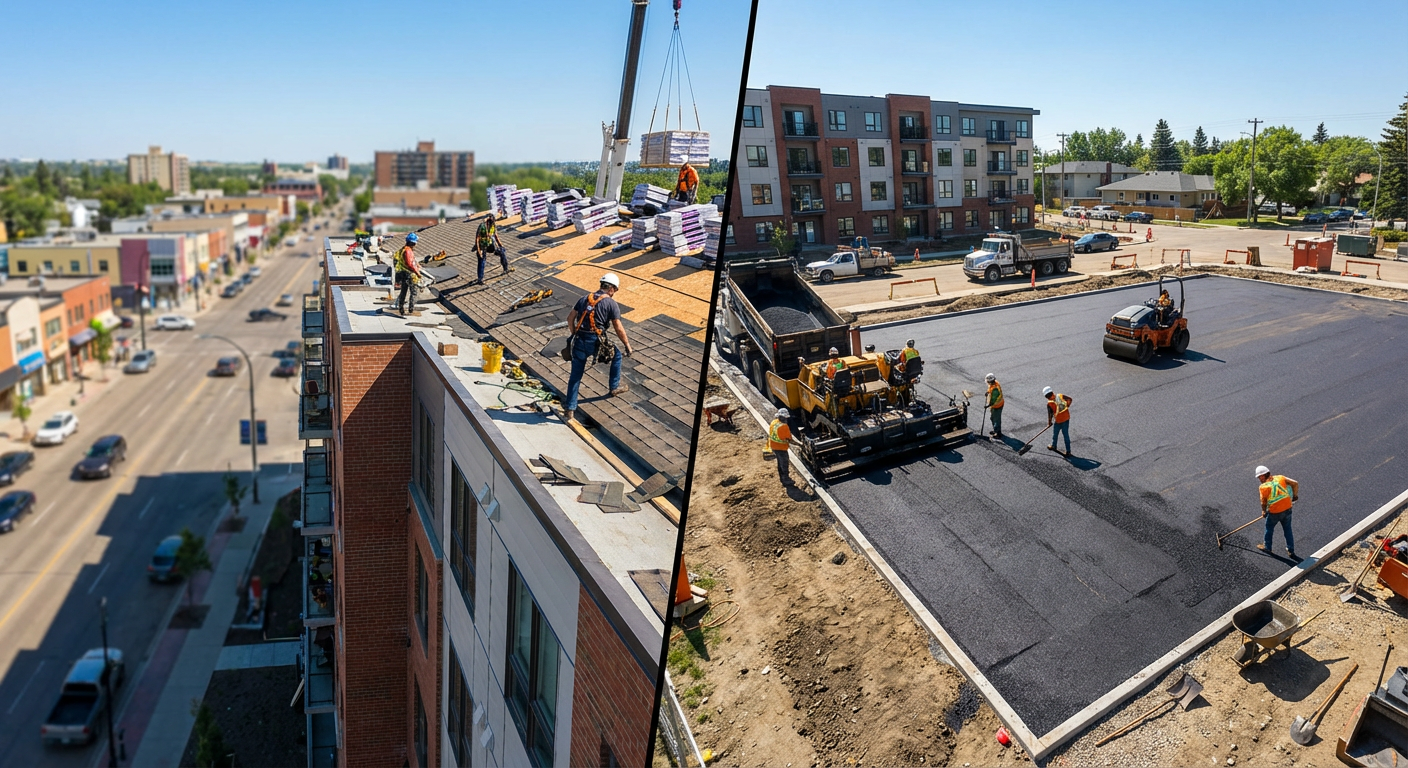
St. Albert Condo Boards: Planning Your Next Update
St. Albert sits on the northwest edge of Edmonton, and its condominium corporations follow the same provincial rules as every other Alberta corporation. There is no separate municipal reserve fund requirement. What differs from building to building is the timing: when the first plan was approved, when the last update was approved, and which major components are coming due within the 30-year horizon.
For St. Albert boards, we suggest three practical steps:
- Find your approval date. Look in the minutes for the motion approving your current reserve fund plan. That date sets your section 30 deadline.
- Compare the report to what has happened since. List major repairs, insurance claims and component replacements since the last report. If the list is long, consider an early update.
- Book early in the season. Roof and exterior access are easier outside deep winter. If your deadline falls in winter or early spring, start the process well before it.
Our team serves St. Albert as part of the Edmonton Metro area. Learn more about our Reserve Fund Study in St. Albert and our Reserve Fund Study in Edmonton services.
Reserve Fund Studies Across the Edmonton Region
Our team provides reserve fund studies for condominium corporations throughout the Edmonton Metro area:
- Edmonton
- St. Albert
- Sherwood Park / Strathcona County
- Spruce Grove
- Stony Plain
- Leduc
- Beaumont
- Fort Saskatchewan
We also serve Calgary, Red Deer and communities across Alberta.
Is your 5-year deadline approaching? Request a Reserve Fund Study quote →