Need a Reserve Fund Study in Alberta?
Brookstone Engineering is a reserve fund study provider with in-house APEGA-licensed Professional Engineers (P.Eng.) serving Edmonton Metro, Calgary Metro and Central Alberta. Request a Reserve Fund Study Quote (Alberta)
Building envelope failure is the breakdown of a building's exterior protective layer. That layer includes:
- siding and cladding
- masonry
- windows
- roofs
- the flashings, sealants and membranes that tie them together
When it fails, water and air get into the structure, and deterioration speeds up behind finishes that may still look fine from the parking lot.
For Alberta condominium corporations, the envelope is usually among the largest groups of components in a reserve fund plan. It is also where late discovery hurts most. This guide explains how our engineers look for siding, masonry, roof and window risks during a reserve fund study. It also explains how those findings become realistic timing and funding in your plan, and what is different for buildings in Sherwood Park and Strathcona County.
Why the Building Envelope Matters in an Alberta Reserve Fund Study
Managing a townhouse complex? Our townhouse reserve fund study guide covers row-housing questions such as roads, unit boundaries and phased roofing. This guide focuses on how an engineer assesses the envelope itself.Alberta's Condominium Property Regulation requires a reserve fund study to inventory all depreciating property that may need repair or replacement within the next 30 years or longer. It must also assess the property's present condition, estimate when each component will need work, and estimate the cost using costs no lower than current costs (s.23(1)). Exterior components are a large share of that inventory. The provider must also inspect the property visually on site and review documents such as construction drawings and maintenance records (s.23(2)), and that is where envelope problems usually show up first.
Alberta's Climate Stresses Exteriors
Three conditions drive most envelope deterioration in the Edmonton region.
Freeze-thaw cycling. The City of Edmonton's summary of winter climate trends reports about 12 freeze-thaw cycles a year on average, based on historical station data. It also finds that early thaws have become more common. Climate modelling in the same report projects warmer, wetter winters that still include periods of deep cold, freeze-thaw counts about the same or slightly higher by mid-century, and possibly more frequent rain-on-snow and freezing rain.Each cycle lets water that has soaked into brick, mortar, concrete or sealant joints freeze and expand. Over many winters, that widens small defects into larger ones.
Hail. The Insurance Bureau of Canada notes that hail season in Alberta and the Prairies runs from June to September. Hail can damage roofing, siding, windows and vents in a single storm. Two Alberta events show the scale:- June 13, 2020, Calgary: over $1.3 billion in insured damage, the costliest hailstorm in Canadian history according to IBC.
- August 2, 2019, Edmonton area: about $90 million in insured damage, according to IBC and CatIQ. The storm hit west Edmonton, Spruce Grove and Stony Plain.
Siding Systems: Identifying Failure Patterns Before They Spread
Vinyl Siding in Cold Weather
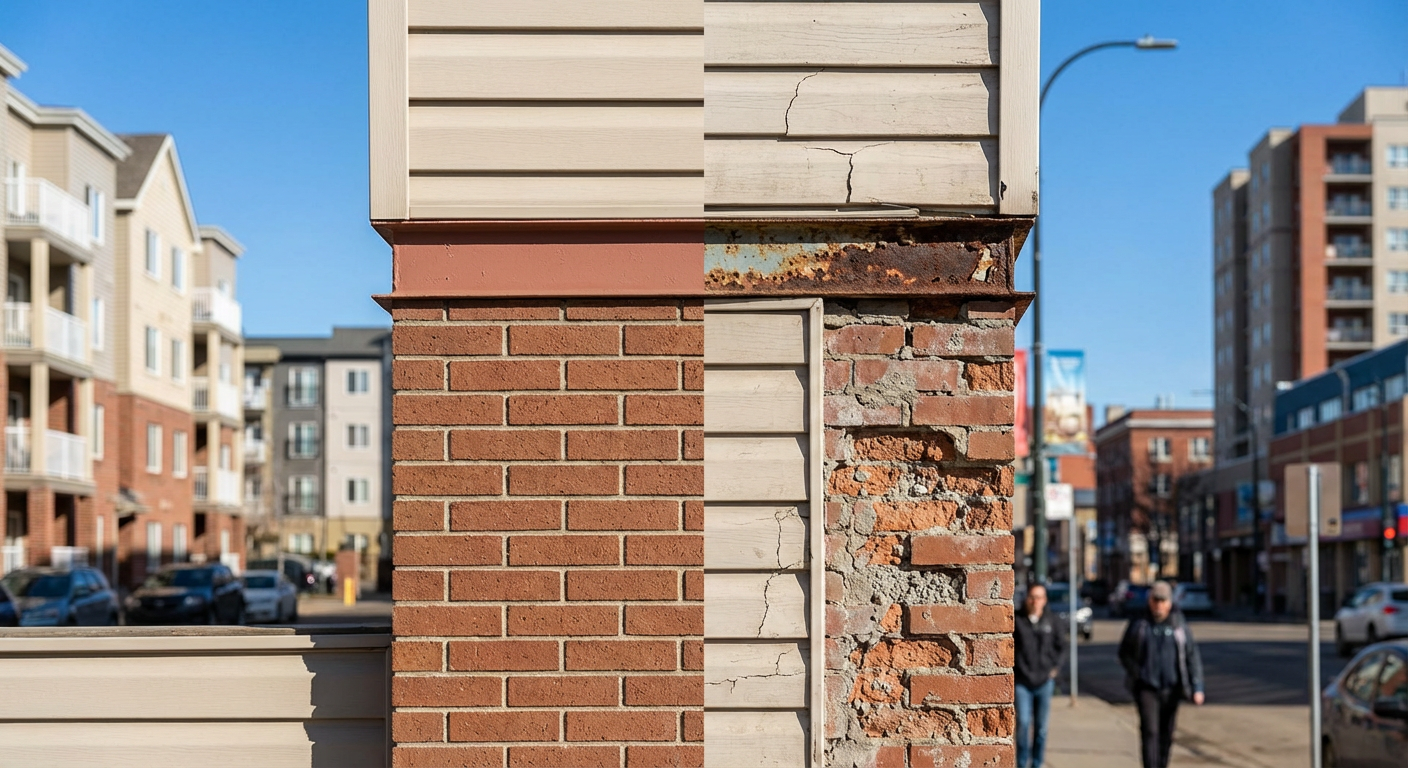
Vinyl is common on Alberta wood-frame condos because it is inexpensive and low-maintenance. In cold weather, it becomes more brittle, so impacts from snow-clearing equipment, ladders, bins or hail can crack panels that would flex in summer. Once a panel cracks, wind-driven moisture can reach the sheathing membrane and sheathing behind it.
During a study, we look for:
- fading and chalking, which signal UV ageing
- warping or waviness, which can point to fastening or thermal movement problems
- cracks at corners, around penetrations and along seams
- impact damage from hail or debris
- installation details such as expansion gaps, fastening and trim
Older vinyl and thinner profiles generally have less impact resistance than current products. That affects how we estimate remaining life for your specific building.
Wood and Fibre Cement
Wood siding rots where water collects or flashing is inadequate. South- and west-facing walls usually weather fastest. Fibre cement is durable, but poor installation can cause early failure, including:
- inadequate clearance from grade
- missing kick-out or head flashings
- incorrect fasteners
Its painted finish also needs periodic renewal.
In the plan, we separate three kinds of work:
- Routine maintenance (painting small areas, minor caulking) usually belongs in the operating budget.
- Component repairs (replacing damaged boards or panels) may be operating or reserve work, depending on scale and your corporation's policies.
- System replacement (full re-cladding) is reserve fund work.
Getting this split right matters. Section 38 of the Condominium Property Act directs reserve funds to major repair and replacement that does not normally occur annually. Calling capital work "maintenance" can drain the operating budget and make the reserve look healthier than it is. Our article on reserve vs. operating expenses in Alberta covers the distinction.
Hail Damage and Insurance
Hail damage is different from gradual wear:
- It can affect a whole elevation, or a whole building, at once.
- Whether it is covered depends on your policy, its deductibles, and how it treats cosmetic versus functional damage.
- It can move a planned replacement years earlier than the study projected.
A reserve fund study cannot predict a storm. What it can do is document envelope conditions at the time of the site visit. That baseline is useful when a claim is assessed later, and it gives the board a clear picture of which components are most exposed.
Masonry and Brick Veneer: Slow Deterioration That Is Easy to Miss
Freeze-Thaw Damage in Brick
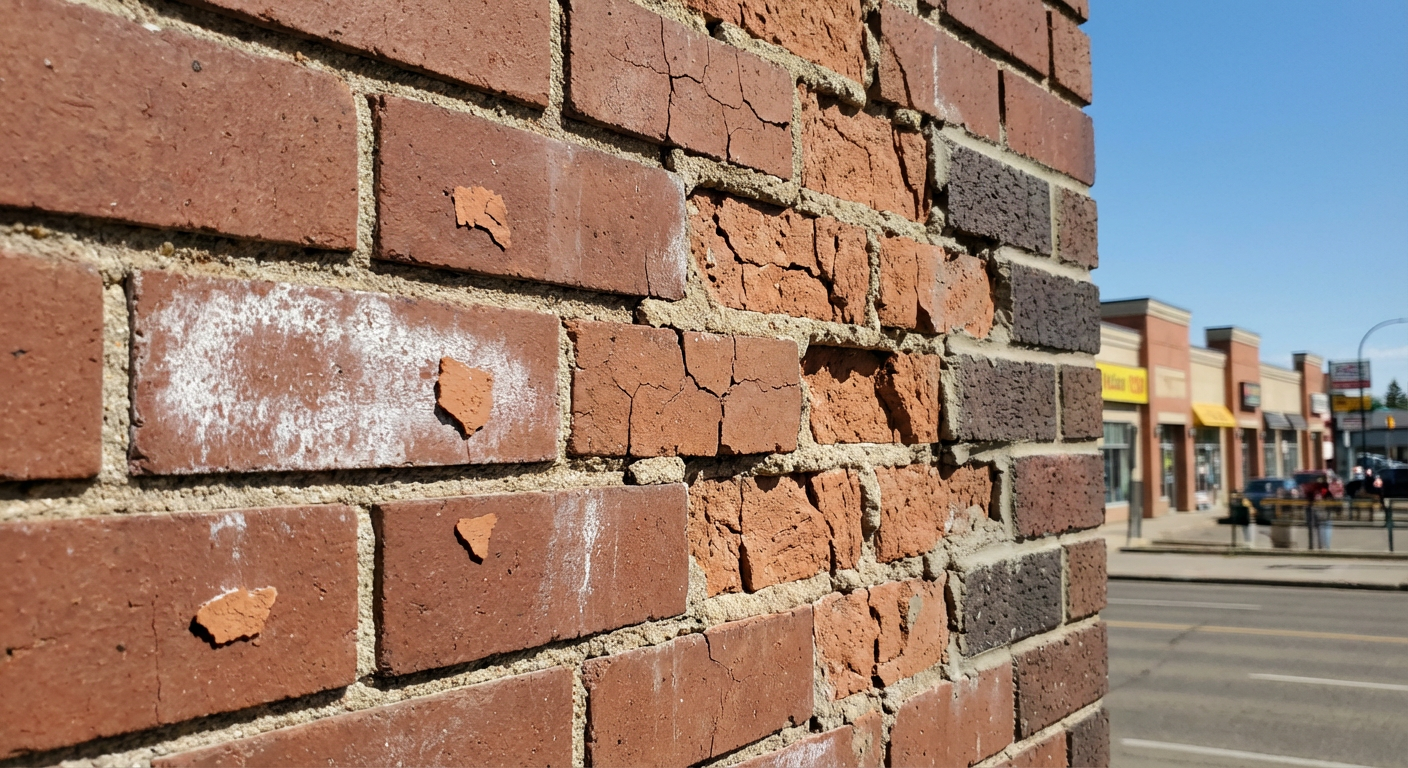
Clay brick and mortar are porous. Water absorbed into the masonry expands as it freezes, and repeated cycles break down the surface. This shows up as spalling: chips and flakes at first, then larger loss of the brick face. Caught early and paired with fixes to drainage, flashing or joints, spalling can often be stopped before large-scale brick replacement is needed.
We look for patterns that point to the water source:
- vertical bands of damage below failed copings, flashings or downspouts
- horizontal bands at floor lines, often linked to shelf angles
- damage concentrated at corners and on exposed elevations
- damage at grade level from splash-back, snow piles or poor drainage
Mortar Joints and Repointing
Mortar is meant to be the sacrificial part of a masonry wall: softer than the brick, and easier to renew. Warning signs include:
- joints receding behind the brick face
- cracking along bed joints
- powdery, crumbling mortar
- open voids
Once joints open up, water can get past the veneer and reach ties, lintels and shelf angles. We record joint condition by elevation so the plan can phase repointing where that makes sense. How long joints last before repointing depends heavily on exposure, detailing and past maintenance, so we base timing on what we observe rather than a generic figure.
Efflorescence: The White Warning Sign
Efflorescence is the white salt deposit left behind when water moves through masonry and evaporates. Light efflorescence on new construction is common. Persistent or recurring efflorescence on an older building signals ongoing moisture movement, often from:
- failed flashing at roof edges or window heads
- blocked weep holes
- compromised wall ties or cavities
- poor drainage at grade
We note whether deposits look fresh or old, because active moisture sources may call for repair or investigation before the next scheduled replacement.
Lintels and Shelf Angles
Steel lintels and shelf angles carry brick over openings and at floor lines. When water reaches the steel, it corrodes. Rust takes up more volume than the original steel, so corrosion pushes on the surrounding masonry and causes:
- horizontal cracking at shelf angle lines
- outward displacement of brick
- spalling at steel bearing points
This damage can develop behind brick faces that look intact, which is why we watch closely for these patterns. Lintel and shelf angle repairs usually mean removing and rebuilding masonry. Where we see warning signs, we recommend a focused investigation so the board can plan the work before it turns into an emergency.
Roofs and Windows: Planning the Rest of the Envelope
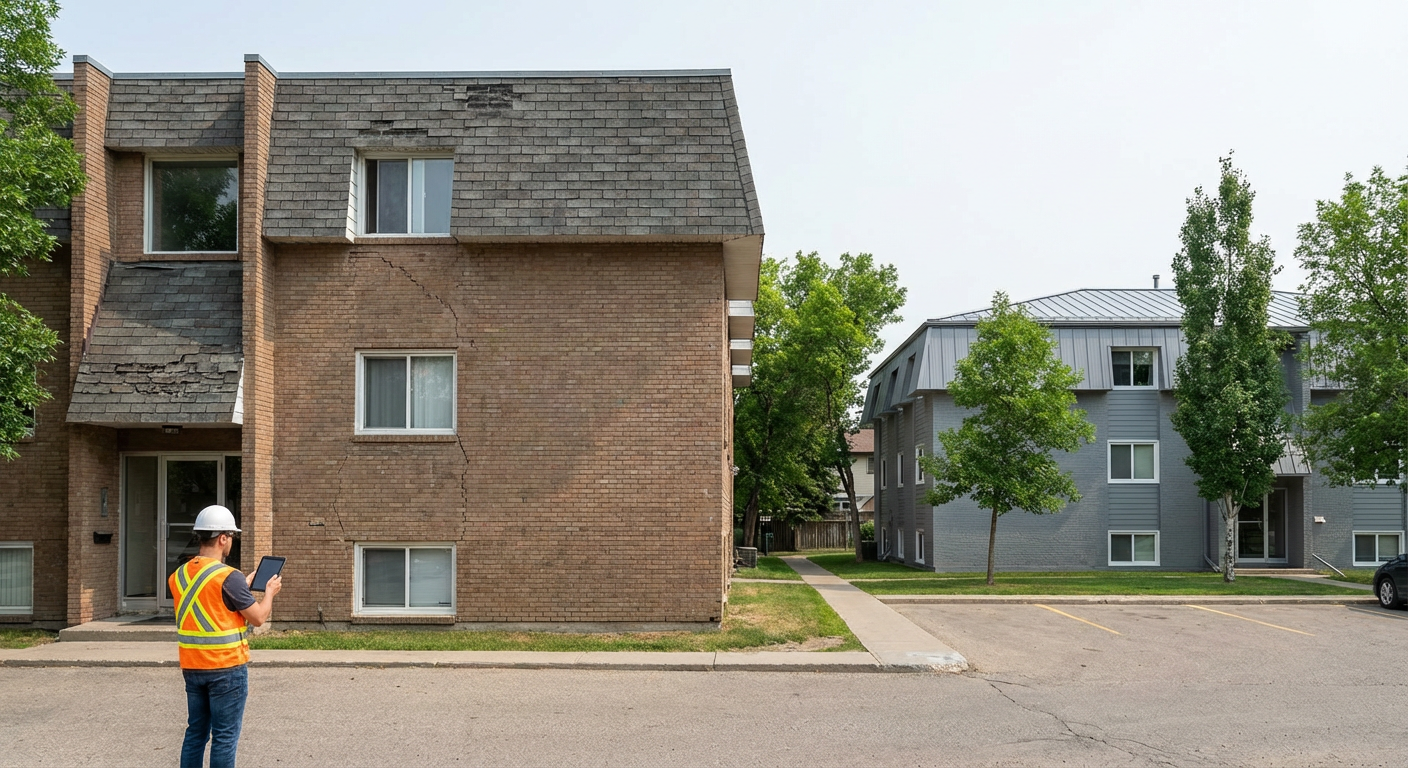
Siding and masonry rarely fail in isolation. Roofs and windows share flashings, transitions and access equipment with the walls, so a good reserve fund plan looks at all of them together.
Roof Replacement Is More Than Roofing
How long a roof lasts depends on:
- the material (shingle, modified bitumen, single-ply membrane or metal)
- installation quality and maintenance
- exposure and slope orientation
- foot traffic from rooftop equipment servicing
- hail history
A realistic roof replacement estimate allows for more than the new roofing. It should also account for:
- tear-off and disposal
- deck or substrate repairs found during tear-off
- insulation, if it needs to meet current requirements
- drainage improvements (drains, scuppers, slope)
- new flashings, penetrations and edge details
- design, specifications and permits
Phasing Large Roof Areas
For multi-building complexes or large roof areas, phasing can spread costs over several years. Common approaches are:
- building by building
- section by section
- worst areas first
- targeted repairs to extend service life while reserves build up
Phasing needs watertight tie-ins between old and new sections and attention to warranty terms. The plan should show the phasing, not just one lump sum.
Windows: Sealed-Unit Replacement or Full Replacement?
In modern windows, the first thing to fail is often the sealed insulating glass unit (IGU). Fogging between the panes means the seal has failed. A reserve fund plan should distinguish between two options:
- Sealed-unit (IGU) replacement keeps the existing frames and replaces the failed glass units. It can work as an interim step when frames, hardware and weatherstripping are still sound.
- Full window replacement replaces frames, hardware and glazing. It allows better perimeter flashing and air sealing, operability upgrades and energy improvements, and it may bring code requirements into play.
Most plans carry full replacement as the main line item, with IGU replacement as a way to manage cash flow in the meantime.
Lead Time and Season
Window, roof and cladding work in the Edmonton region is best done in the warmer months. Projects also need design, tendering and fabrication time before anyone is on site. The plan should show replacement years far enough ahead that the board can start design and tendering in time. Our guide to using your reserve plan to tender capital projects explains how.
Coordinate Envelope Work
When scaffolding or swing stages go up for one envelope project, it is often worth bundling related elevated work at the same time, such as sealant renewal, window perimeter flashing or cladding repairs. Re-cladding is also the natural time to fix window flashing details and roof-to-wall transitions. Bundling reduces the number of times access equipment has to be mobilized, and the plan should line up component timing where it is practical to do so.
How an Engineer-Led Reserve Fund Study Finds Envelope Risk
What a Visual Assessment Can and Cannot Tell You
A reserve fund study relies on a visual, on-site inspection. It is good at spotting surface damage, repeating failure patterns, differences between elevations, and obvious defects such as displacement or staining. It cannot reliably confirm:
- concealed corrosion
- moisture content behind cladding
- the remaining strength of damaged structural elements
- whether original construction met code
A good report says so plainly. It separates confirmed deterioration, expected deterioration based on age and conditions, and unknowns that need invasive investigation, so the board can decide whether further testing is worth the cost.
Building a Component Inventory for the Envelope
Instead of one "siding" line item, we break the envelope into components. For each one, the inventory records:
- material, location and quantity
- observed condition
- estimated remaining life and replacement year
- cost in current dollars
- interdependencies with other components
On a brick-clad building, that means separate lines for:
- face brick
- repointing
- shelf angles and lintels
- flashings
- weeps
- sealants and control joints
- copings
This level of detail lets the board phase work by elevation and see which components are driving funding. See our guide to the reserve fund study component inventory.
Construction Era
Each construction era tends to have its own envelope weak points, from older brick walls with limited drainage to the first generation of drained vinyl-clad assemblies. We use the building's age and documents to know where to look. Age alone never sets the timing. Maintenance history, exposure, original quality and past repairs all matter, which is why we inspect every building on site.

What Alberta Law Requires
The reserve fund study. The Condominium Property Regulation (AR 168/2000) requires:- a study covering 30 years or longer, with costs not less than current costs (s.23(1))
- an on-site visual inspection, a board interview and a document review (s.23(2))
- a written report stating the provider's qualifications and signed by the provider (s.23(3))
- a reserve fund plan approved by the board and provided to owners before funds are collected under it (s.23(4)–(6))
- a first study no later than 2 years after the condominium plan is registered (s.24)
- a new study, report and approved plan on or before 5 years from the day the most recent plan was approved (s.30)
Sherwood Park and Strathcona County: Local Envelope Considerations
Sherwood Park condominiums follow the same provincial rules as the rest of Alberta. The local conditions that affect envelope planning are similar to Edmonton's, with a few points worth noting.
- Freeze-thaw and winter moisture. Sherwood Park sits immediately east of Edmonton and shares the regional winter pattern described in the City of Edmonton's climate summary: regular freeze-thaw cycles, more frequent early thaws, and a projected increase in rain-on-snow and freezing rain. Masonry, sealant joints, balcony and stair concrete, and roof drainage need close attention.
- Hail exposure. IBC identifies June to September as hail season across Alberta and the Prairies, and the 2019 storm showed the Edmonton region is not immune. We are not aware of a published loss figure specific to Sherwood Park. Still, boards should treat hail as a real regional risk to roofing, siding and windows, and keep good condition records to support future claims.
- Clay soils and shallow groundwater. A geotechnical investigation in Strathcona County's planning documents for the Wye Road area of Sherwood Park found topsoil or fill over clay and sand, over clay till or bedrock. Some test holes found groundwater as shallow as 0.5 m. CMHC notes that clay soils shrink and swell as their moisture content changes. When they dry and shrink, the result can be differential settlement, foundation cracking, leakage, and doors and windows that no longer fit properly. CMHC adds that Prairie clays generally show these effects less severely than the sensitive clays of eastern Canada. Conditions vary from site to site, but where we see cracking, sticking doors or windows, or drainage problems at grade, we examine foundations, grading and envelope-to-foundation transitions together and recommend geotechnical input if needed.
Our team serves Sherwood Park and Strathcona County as part of the Edmonton Metro area. Learn more about our Reserve Fund Study in Sherwood Park and our Reserve Fund Study in Edmonton services.
Preventing Envelope Failure: Practical Steps for Boards
Routine maintenance, usually funded from the operating budget:- annual review of sealants at windows, doors and penetrations
- checks of downspouts, grading and weep holes
- inspection of siding attachment and impact damage
- spot checks of mortar in exposed areas
- clearing debris from drainage paths and weeps
Good maintenance helps components reach or exceed their expected life. See maintenance strategy vs. reserve planning.
- Signs that a focused envelope investigation is warranted: - repeated interior water leaks or staining across several units
- bulging or displaced brick
- widespread spalling
- humidity or mould problems that suggest envelope moisture
- past repairs that did not stop a leak
- deterioration that seems unusual for the building's age
A focused investigation may include moisture surveys, thermal imaging, water testing, exploratory openings or a structural review of lintels and shelf angles. Finding a problem early gives the board time to get competitive bids, schedule work in good weather, coordinate with other projects and adjust contributions gradually rather than through a sudden special levy.
Expect costs to move. Study estimates reflect costs at the time the report is prepared. Actual tender prices depend on market conditions, hidden damage found during the work, and code-driven upgrades. Updating the study on schedule, and earlier if conditions change, keeps the plan close to real costs. See how inflation and construction costs affect reserve planning.Reserve Fund Studies Across the Edmonton Region
Our team provides reserve fund studies for condominium corporations throughout the Edmonton Metro area:
- Edmonton
- St. Albert
- Sherwood Park / Strathcona County
- Spruce Grove
- Stony Plain
- Leduc
- Beaumont
- Fort Saskatchewan
We also serve Calgary, Red Deer and communities across Alberta.
Concerned about your building envelope? Request a Reserve Fund Study quote →